
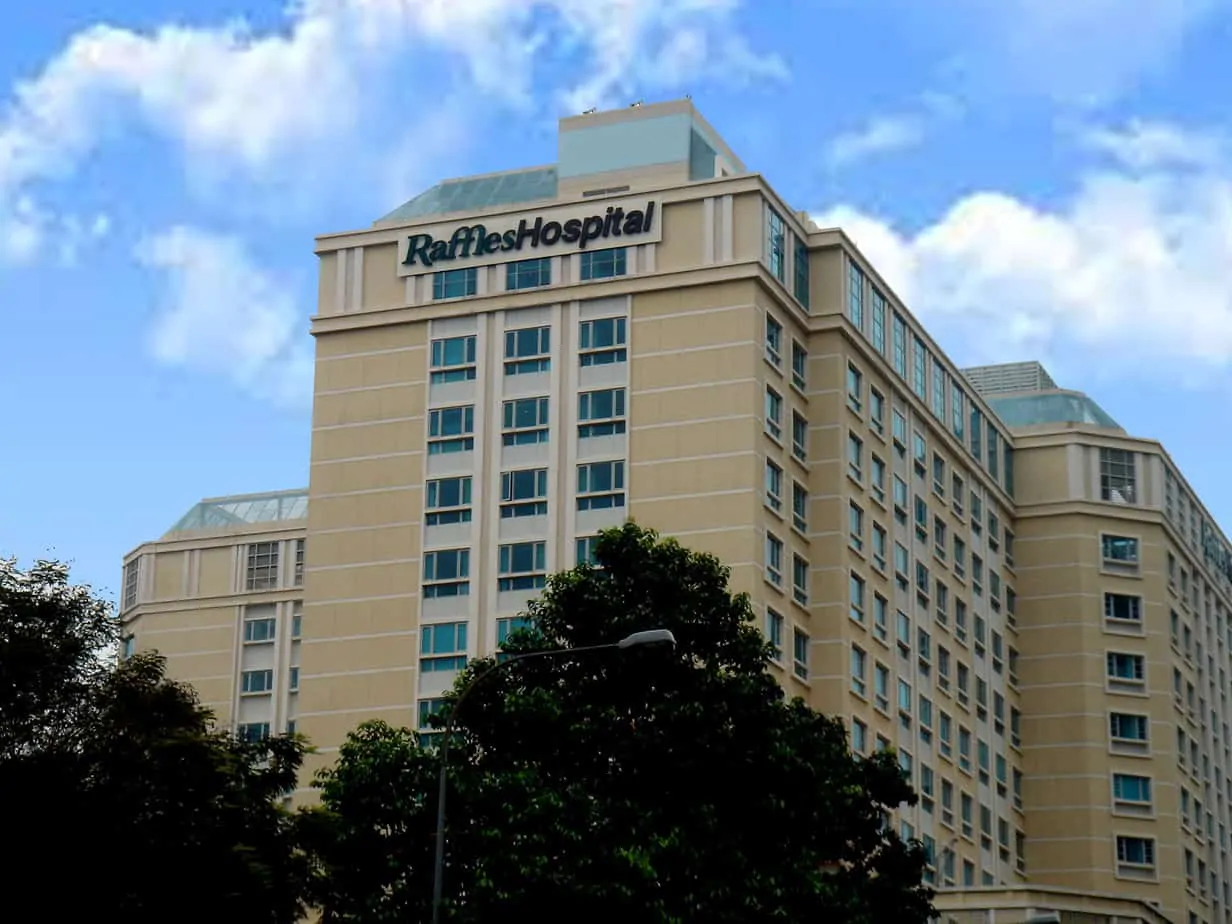
Choosing an HSCT facility that makes you feel confident is very important. It is necessary to explore which type of HSCT (Myeloablative or Non-Myeloablative) is best for you. More often than not, this is out of your hands, as it is very dependent on the type of MS you have and how long you have had it since diagnosis.
Most facilities around the world will treat relapse Remitting forms of MS. It is more difficult to get treatment if you have a progressive form of MS. This is because Dr. Burt, who pioneered the procedure in Chicago, established early on that progressive forms of MS were less likely to benefit from the HSCT. Find out more about this here.
He has since relaxed his stance on some patients who are in the early stages of secondary progressive MS. Diagnosis must take place within two years of the first symptoms. However, this has not affected the criteria that the EBMT follow.
The EBMT, therefore, follows his first protocol, and consequently, many facilities that follow EBMT guidelines are unprepared to treat progressive patients.
To meet the criteria for HSCT, both Dr. Burt and the EBMT demands that candidates show active inflammation and enhanced lesions on an MRI. Since progressive patients rarely show active inflammation, they cannot qualify for treatment.
MOST FACILITIES FOR HSCT REQUIRES TWO FORM OF MAINLINE DISEASE MODIFYING DRUGS
Equally, under these guidelines, most facilities want proof that patients have taken at least two mainline disease-modifying drugs. Examples are Tysabri (natalizumab) or Lemtrada (alemtuzumab). Each facility has a specific protocol.
However, things have changed considerably with the innovations and refinements in treatment. Most facilities perform a version of Non-Myeloabltive HSCT. See more about this here.
MOST FACILITIES ARE NON-MYLEOABLATIVE
When choosing a facility, identifying what type of treatment you are seeking helps. Unfortunately, the only facilities currently treating progressive forms are Russia, Israel, and Mexico. These facilities perform the Non-Myeloablative form of treatment.
HSCT for autoimmune diseases started in the early 1990s. The protocol has improved significantly in the last ten years. It is now much safer and more comfortable on the body than when first performed.
All forms of treatment have their own merits. Dr. Federenko at the Maximov Institute in Russia has enjoyed some formidable results for PPMS patients. He has developed his specific protocol, which would fall into the Non-Myeloablative category.
DR. BURT PIONEERED HSCT AT NORTHWESTERN HOSPITAL, CHICAGO
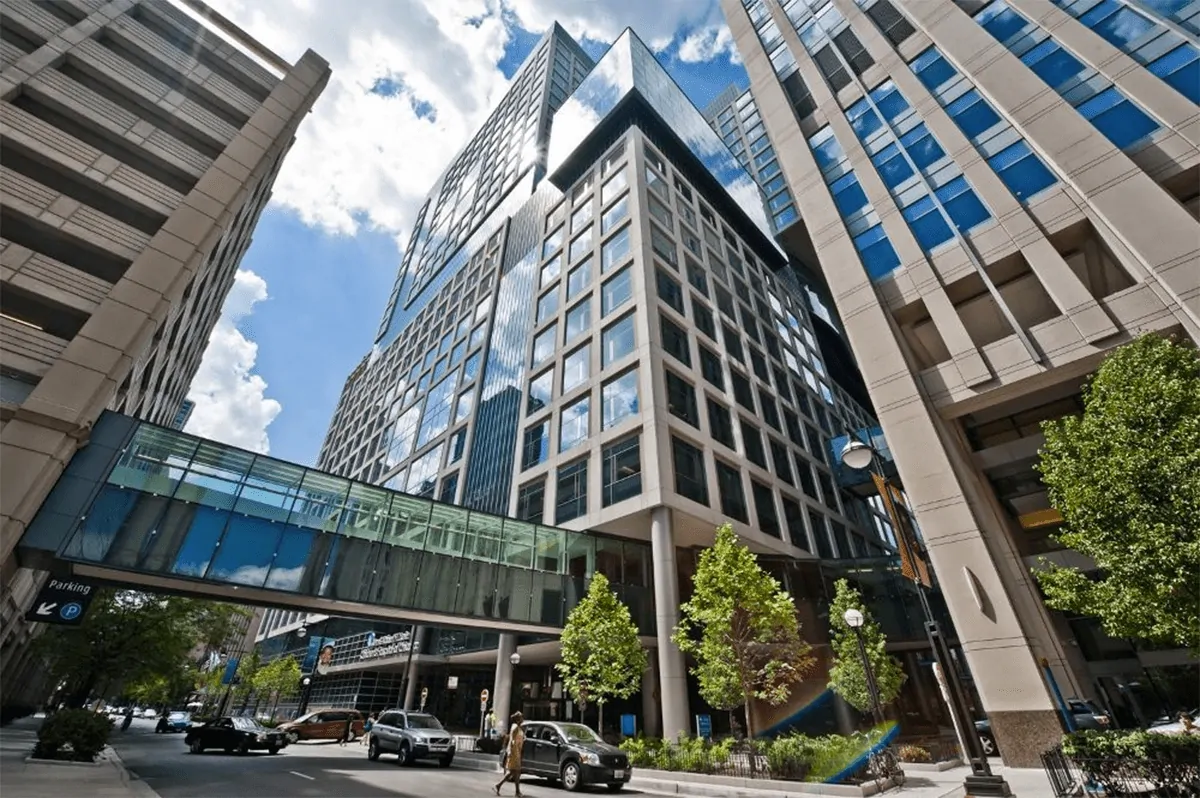 Northwestern Memorial Hospital Chicago is where Dr. Burt (considered the father of HSCT) treats patients. Learn more about Dr. Burt here.
There are provisions for insurance at this facility. Additionally, when accepted under Dr. Burt’s criteria, his team can help you apply for insurance to cover the cost of HSCT. They are very supportive and take the headache out of finding the funds to pay for this treatment.
CHOOSING AN HSCT FACILITY – EDSS SCALE
All facilities will ask about your level of disability and mobility is determined on the EDSS Scale, or Expanded disability status scale. Most facilities will not accept people with and EDSS over 6, but some facilities make exceptions—specifically Mexico, Russia, and the Philippines.
CHOOSING AN HSCT FACILITY – EBMT GUIDELINES

HSCT treatment facilities in Europe, are signed up to an agreement with an organization known as the EBMT – https://www.ebmt.org/Contents/Pages/Default.aspx. The EBMT has formulated a standard treatment criteria to regulate and compare results from patients treated throughout the world.
Correspondingly these facilities will only treat MS patients with relapse remitting MS, with at least two failed DMDs (disease-modifying drugs). Also, they require current MRI’s that show active lesions and inflammation. South Africa, and Singapore as well as Germany and Italy, adhere to EMBT Guidelines(See Facilities).
CONCLUSION; CHOOSING AN HSCT FACILITY


NEXT: MYELOABLATIVE VERSUS NON-MYELOABLATIVE HSCT
If you are unsure about what sort of HSCT treatment is best for you, have a look at this link. Here we explain the difference in the two types of treatment.
How do I apply to be accepted for treatment? I currently have rrms DX 02 please email or call 559-903-7109 California. Thanks for your time.
Please help. Wanting therapy
I applied for treatment in Russia and your EDSS score needs to be a 6.0. Mine is 7.0 so I was told that I can not have it done there but I am persistent and will be trying at all hospitals that do HSCT treatment.
Hi. I am 53 years old and was dx with RRMS in late 2009. I have progressed significantly since then to SPMS. I’m not sure which protocol would best for me; however, I am leaning toward what Mexico has to offer. I will speak with my neurologist when I see him next week. Hope do I even apply for this treatment?
Hi Renee. You can apply by e mail. The contact information for Mexico is on the HSCT Facilities page. Its easy to apply. Mexico is a good choice. You are still relatively early if you were diagnosed in 2009, so there is a good chance this treatment will help you. Join HSCT Awareness on facebook to ask other people who have had this treatment for their thoughts! Good luck!
My wife has Primary Progressive MS, age 40, diagnosed 3 years ago and is in need if treatment asap. Please help. Please reply with a contact name and phone number. Thank you
Hi Mark I did send an e mail to ask for further information to see if she would be a good candidate.
Hello, I’m a 47 year old female the was Dx with RRMS in 1992 (which was the onset and confirmed via MRI). I experience little to no flare ups till about 7 years ago where my balance, coordination, vision, memory issues starting to decline/decrease even though my MRI’s showed not activity. Even made a full recovery from Bell’s Palsy in 2008… Neuro is borderline wanting to classify me as SPMS currently. None the less I have been researching the heck outta this HSCT treatment and an highly interested in the procedure. In your experience/judgment, do you think that I would be a good candidate? I’m currently not taking any meds for the MS as I’m feed up with the daily injections and don’t see the copaxone doing anything but giving me anxiety and depression cause I feel it’s useless drug after 13 years. Your thoughts?
Hi Julianne, I have sent you an e mail. I need more information in order to consider your case.
Hi Julianne,just read your post and I also have had Ms since 1995 and my symptoms are the same as yours,I have never had any medication or diagnosis,I have been to 5 Neurologists and not one of them will say it’s MS,so I am so confused as what to do next ,my last MRI showed lesions in the brain and spine,so I will be very interested to hear from you Regards Helen Storr
Hi I am 50 and was DX in 1994 with RRMS and have had new lesions appear in brain and spinal card in the last 2 years. My hands are numb, shooting pains in my eyes and my balance is not the best. I am wondering if any centre would and could help me.
Hi there the best thing to do is apply directly to the facilities that would treat you and they can evaluate whether you would be a good candidate. You can find their details on the facilities list on the site. Mexico, Russia, Philippines would be the ones to apply to. India may be posted as a new facility soon but we are waiting to get feedback on the first group to be treated there first. If it proves to be legitimate it is considerably cheaper than most other facilities at $30,000. It will be on the list by the end of November. If you want to learn more about HSCT and ask people questions join the face book groups. I am not sure where you are located but there is Hematopotic stem cell transplant for MS and Autoimmune diseases, HSCT Awareness, and then there are also groups for specific facilities. Here you can ask specific questions regarding treatment. Good luck!
If you want to learn more about HSCT and ask people questions join the face book groups. I am not sure where you are located but there is Hematopotic stem cell transplant for MS and Autoimmune diseases, HSCT Awareness, and then there are also groups for specific facilities. Here you can ask specific questions regarding treatment. Good luck.
I was diagnosed in 1995, and are now 2nd progressive, I walk with a walker and have bad balance, I am in very good health and am very keen to be rid of this beast.
Hi the best thing to do is to apply to the facilities that are listed on the World Wide Facilites list. Your options would be Mexico, Russia, Philipines and possibly India which is not on the list yet as they are treating their first group at the moment and we are waiting to get feedback before approving the facility. It is considerably cheaper at $30,000 than any of the other facilities. When you present your MRI info and your specific details they can let you know whether they think that you would be a good candidate. If you want to learn more about HSCT and ask people questions join the face book groups. I am not sure where you are located but there is Hematopotic stem cell transplant for MS and Autoimmune diseases, HSCT Awareness, and then there are also groups for specific facilities. Here you can ask specific questions regarding treatment.
Kind regards, and good luck,
Hi Despina, where are you based please? Have you taken any DMD’s?
Hi Monica, I need more information? What is your EDSS. Have you taken any DMD’s?
I am 47 with secondary progressive, I would be very interested in Mexico, please send me information as how i apply. With thanks Dehra
Hello, I would be very interested with this type of treatment. Mexico, Russia or anywhere. Northwestern turned me down since I had no active lesions on my MRI. That was a couple of years ago when I didn’t have any balance issues. I guess I should go back into the corner and stare at the wall and endure this slow death of a disease. Hopefully something god happens. Hopefully this is a better year. Please get back to me with what I may need as far as medical records. Also, what might the cost be. I have also tried so many things. I am currently on OCREVUS to no avail. Still feel like I am walking on marbles with Bambi legs. Hoping some info comes out that helps the less fortunate other than just saying that a firefighter is still working after 25 years. If that was the case for most of us, we wouldn.t be looking into this as much. Please get back to me with what you might require. Unfortunately the FDA isn’t doing much. I wish they would fast track something that worked, Another subject. I guess old Trump isn’t doing much in this area. He did say he was. Ha!Ha! Take and God bless. Godspeed, Dave Uherek
Hi Dave, I can hear your frustration with everything related to MS and your condition. Yes it is very upsetting and frustrating there is no doubt. I personally am no fan of Ocrevus as it is Rituximab (a chemo drug) dressed up by the drug company as the original patent expired. As far as receiving HSCT goes there is more and more evidence that it is less effective on long term diagnoses of MS where the disease has become progressive. How old are you and when were you diagnosed? I do disagree with the refusal to treat anyone that does not show enhanced lesions and active inflammation, as the truth is that one week you could show inflammation on an MRI and the next week show none. However there are other factors that need to be computed when weighing up whether it is worth pursuing treatment. What is your EDSS? I am happy to offer you advice, but at the end of the day perhaps the most useful thing to do is to contact Dr. Federenko in Russia and supply your history. He is very experienced and well equipped to advise whether you would be a good candidate for this procedure. The contact information can be found on this site on the HSCT FACILITIES page. Please reach out if you have more questions, but I wish you all the best.
To ADMIN, Hello and thanks for your response. In a nutshell, I was Dx in 1994 (about 24 years ago. My initial symptoms were identified then. This went away for 10 years (no symptoms noticed) I tore a minor pectoralis ligament power lifting. (about 420 pounds) . Went to surgery to have repaired. Since the hospital had to put me asleep, I started to experience symptoms 2 – 3 years after that. Never knew that I would lose s much strength and coordination over the next 10 years. Currently I am 53 with a wheelchair looking like it will be my best friend next year the way I am progressing. But I do not show any enhancing lesions so I have been turned away by Northwestern. Was hoping to go through this since I was still in good shape then. Well, the great medical industry we have repaired my ligament, but they have nothing for my ms, which has probably transitioned to SPMS according to my neuro. I don’t know where to go from here, however, I want to go somewhere. Ha! The medical industry repaired my ligament, however, left me high and dry on the ms. Still in ok condition, however, I do not walk much anymore due to drop foot and coordination. Also, I was never given an EDSS score. So any information is appreciated. GODSPEED, Dave
Question: With the “explosion” of HSCT facilities, how do determine if a particular facility is legitimate?
In particular, I am considering the Repair Stem Cell Institute (RSCI, http://www.repairstemcells.com) with treatment in Germany at the Weber Medical Center (€15,500).
Hi Robert,
Thanks for your comment. To answer your question, unless the facility in question uses chemotherapy as part of the treatment it is not considered a legitimate HSCT facility. At the cost you mention it is highly unlikely that chemotherapy is a part of the treatment at this facility in Germany. Admittedly there are many facilities that are “jumping on the bandwagon” so to speak. As far as I am aware unless the facility is listed on my list on this website, and unless the procedure is as described here on this website it is not legitimate HSCT but some other “Stem cell” procedure. As far as I am aware none of these facilities have a proven track record of success and many of them are bogus establishments taking advantage of peoples desperation!! 🙁
Also, I have tried steroids, gilenia, bg12, tysabri, and rituximab to no avail. I have been on OCREVUS (approx. 11months) Appears that Copaxon isn’t helping anymore. Been taking around 6 years. Looking at trying Lamtrada. Any comments? Thanks.
Dave
Hi Dave thanks for that information. There is a section on this site that helps you to evaluate your EDSS Score, but there are also mulitple tool online that can help you. Just google “EDSS SCORE”. HSCT is less successful for people with a long term diagnosis such as yourself, and although there are unethical (in my opinion) medical establishments that do take people with a higher EDSS it is not always successful and has been known to have no effect and in the most extreme cases actually make things worse. Probably your best course of action is to approach a legitimate facility like Russia for instance which has an amazing record and an amazing Doctor (Dr. Fedorenko) who offers a very fine tuned treatment geared towards each patient. If you send an e mail to them and explain your history he will assess whether he believes you to be a good candidate for HSCT. How are you doing on the Ocrevus? I am not a fan of this drug. It is Rituximab (which is a chemo drug) re-marketed as the patent expired. Have you looked at any other options, like The Coimbra protocol of high dose vitamin D for instance. I myself have been following this for almost a year and a half now and I feel that it has stopped the progression of my disease. There are other things that are important too. I highly recommend you follow a Ketogenic diet as soon as possible to stop inflammation in your body which is one of the main factors in accelerating the disease. The body is a complicated machine and more than one thing is responsible for the initiation of the disease and diet I believe is one of the main factors. If you have more questions please feel free to reach out.
Thank so much for you comments. I plan to look into this a little further. I will provide you with some feedback on where I end up going from here. Thanks again. Dave
Hi,
Does having been treated with Alemtuzumab mean you cannot be given HSCT?
I ask because for a clinical trial of HSCT in the UK one of the exclusion criteria is having been treated with Campath
Thanks,
James
Hi James I believe that there is a 3 month wash out where you avoid Lemtrada at most facilities. Lemtrada is a chemo drug so perhaps the Clinical Trial criteria is different for various reasons. I do not know for sure what they are but I do know that most of the facilities do not exclude you but they do require the 3 month wash out. You need to enquire about this at the facility that you are interested in being treated at. Good luck.
I am 44 years old and diagnosed with ppms about 6 months ago. Strongly thinking of hsct. Can you recommend where I can start this process and the locations that perform this for PPms? Thanks.
Hi Connie. I believe Russia or Mexico would be your options for treatment if you are PPMS. Israel is an option but is considerably more expensive. You can find the contact details on this site under the HSCT Facilities list. Since you have newly been diagnosed you will be encouraged to hear that there are many people you have had successful outcomes. I suggest you join the group HSCT FOR PPMS on facebook, where you can talk to others who have been treated and can advise you on your best course of action. Equally it would be prudent to contact the facilities directly and allow the doctors administering the procedure to access your medical records. MRI’s etc to evaluate you. Good luck with everything! x
I am 37 years old and have 2,5 year MS (relapsing). I used copaxone but it didn’t work. I am in a wheelchair and can walk sometimes about 5 meter. I like to have more information about HSCT.
Is it possible to do HSCT if you only used copaxone, or do you also had to try 2nd medication?
How do you know what the criteria is for each hospital?
How do you know if you need myeloablative or no-myeloablative?
Hi Elma,
It’s great news that you are reasonably recently diagnosed if that is what you mean by 2.5 years? You are also relatively young and relapse remitting MS is the ideal type of MS that benefits the most from treatment. Your EDSS however must be quite high? I would say at least 6 or more likely 7. If you can walk a little then that is also very positive. Where are you based? The EBMT (European Society for Blood and Marrow Transplantation) which is based on the Dr. Burt treatment protocol, and which unfortunately the majority of the treatment facilities in the World are signed up to, requires that you have tried 2 mainline treatments. These are the more serious ones like Tysabri but I think Copaxone would qualify. The criteria and pricing for each hospital can be found on this page on my site: HSCT Facilties Worldwide
There are several facilities that do not require EBMT, most notably Russia and Mexico. You can also find the criteria here, but it is probably useful to get in touch with the facilities that you are interested in and send your information as every case is different and the Doctors performing the protocol are the best qualified to evaluate your case for treatment. If you are in the USA you should contact DR Burt as if accepted insurance can cover your costs. I personaly believe that Myleo or none Myleo are becoming less of an issue now that HSCT has been being performed for some time. The treatment is being tailored more and more to each individual. If you are in the UK you may qualify for free treatment. If you have more questions I will do my best to help. Kind regards and Happy New Year Elma.
Thank you for your anwser! That is good to hear!
Yes I have MS (relapsing) since september 2016 and I am 37 years old. My EDSS is 7. I live in Holland, they don’t do the treatment here, I have to go to another country.
I prefer Russia, Sweden, Belgie or Germany. I will send them an email, thank you. Do you have an emailadress for Sweden (Uppsala) and Belgie? I can’t find it on your site.
Thank you for your help and also a Happy New Year for you!
tina nail
14:00 (0 minutes ago)
to elmalamers@hotmail.com
Hi Elma,
Hi Elma,
Sweden (Upsala) is on the list and there is another facility in Sweden on the list also. Belgium I believe only treats Belgium people so this would not be an option. If you are in Europe all the choices you mention are good and also Italy.
Good luck with all.
Thank you for your help!
Best regards Elma
You are most welcome Elma, please feel free to reach out if you need more help. The only thing I would say that is if you are going for the european options, because they are signed up to the EBMT you may have to try another DMD like Tysabri, but this is something they can tell you and you can discuss with your neurologist. If you choose Russia this is not necessary.
Hi Sean,
I believe you have to be a national of that Country to be treated there but you can contact them to check. I know that they are still doing it as I did have communication with one of the researchers there not that long ago, but not sure what the criteria is these days for treatment. I do not know anyone from my site that has been treated there. Good luck.
I am 58 with ppms have had it 22 years have tried rebif tysbri copaxon tecfederia my edss is 6.5. Can you please tell me the difference in the protocols fir Russia and Mexico. Thank you.
Hi Stephanie,
I suggest that you join the Facebook group for both facilities and ask these questions there. You will also be able to talk to people that have been treated at these facilities. There are quite marked differences with the protocol and sadly I personally do not have time to go into it. Good luck 🙂