
In recent years a keto diet for cancer treatment has gained a lot of publicity and praised for its effectiveness in slowing or preventing secondary cancer tumors from forming. That said, other advocates believe it can help to prevent cancer in the first place.
A keto diet applied as a therapy bases its practice on the fact that cancer cells use glucose to function and grow. Without sugar, they cannot survive. A ketogenic diet, low in sugar and carbs, removes their primary food source. So that cancer cells starve and die. There have been many studies into this hypothesis.
SCIENCE SHOWS THAT RESTRICTING SUGAR HAS A POSITIVE IMPACT ON CANCER
A study took place at the University of Texas, Dallas. Researchers restricted blood sugar levels in mice by feeding them a ketogenic diet. They also gave them a diabetes drug, which prevented the kidneys from reabsorbing glucose in the blood.
The results showed that a combination of the diet and diabetes drug didn’t shrink the lung and esophageal cancers in the mice. But it did keep them from progressing.
Research published in the journal Cell Reports suggested that the restriction of blood sugar might also help combat certain cancerous tumor growths. The lead scientist Dr. Jung-Whan (Jay) Kim Ph.D., commented on the study. He said: “The ketogenic diet, along with the pharmacological restriction of blood glucose, inhibited further growth of squamous cell carcinoma tumors in mice with lung cancer.” He went on to say: “The key finding of our new study in mice is that a ketogenic diet alone does have some tumor-growth inhibitory effect in squamous cell cancer. When we combined this with the diabetes drug and chemotherapy, it was even more effective.”
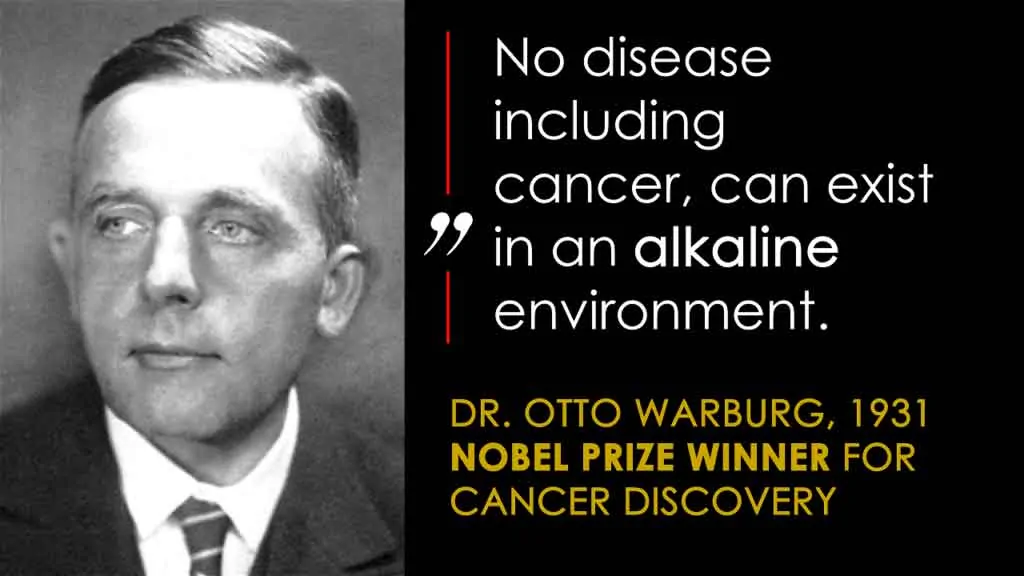
Although this model used mice, studies in humans continue to show positive results. But, research conducted by Dr. Heinrich Otto Warburg as early as 1918, which earned him a Nobel Prize, is as relevant today as it was back then. Nowadays, it is a functioning therapeutic approach to limit and stop cancer.
KETO DIET FOR CANCER AND THE WARBURG EFFECT
A KETO DIET FOR CANCER: THE GENETIC FACTOR
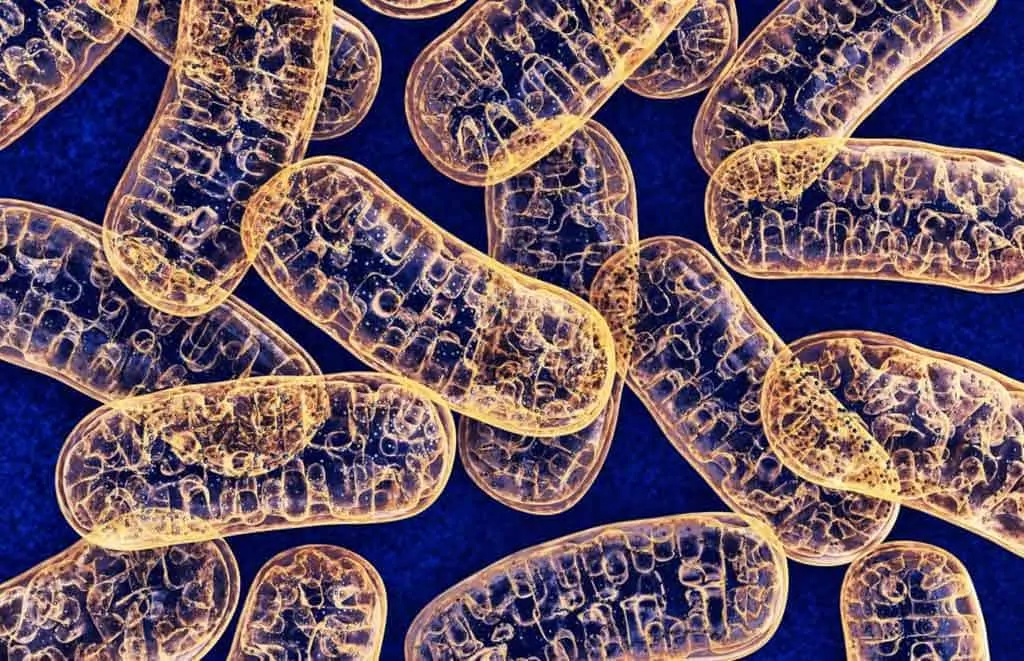
For many years Scientists believed cancer to be a genetic disease with susceptibility being passed on genetically from one generation to the next. The initial focus was on the nuclear genome for the cause of certain diseases. The notion was that conditions are hereditary. However, with the notable increase in chronic illness in the last 100 years, the nuclear genome concept has become suspect.
Surely it would make sense that changes in the nuclear genome would have to occur over thousands of years, not merely hundreds? Scientists were asking themselves this question, which prompted further investigation.
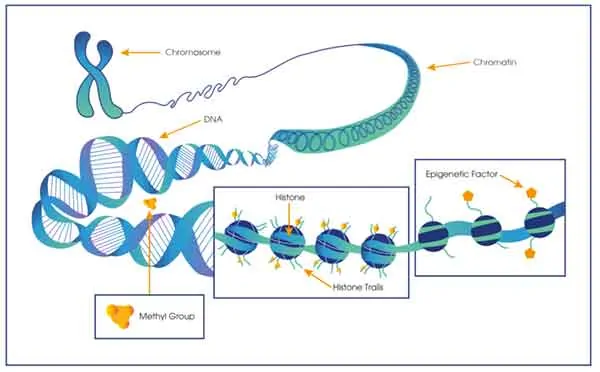
THE IMPORTANCE OF EPIGENETICS
Recent scientific research has shown that epigenetic changes occur much more rapidly in the mitochondrial genome than previously thought. It has become apparent that our level of health is very much dependent on our mitochondria. The healthier your mitochondria are, the healthier you will be.
More profound research into the chronic diseases that plague the population today has revealed that the health of our mitochondria is vital to the health of our bodies.
THE DIFFERENCE BETWEEN CANCER CELLS AND NORMAL CELLS
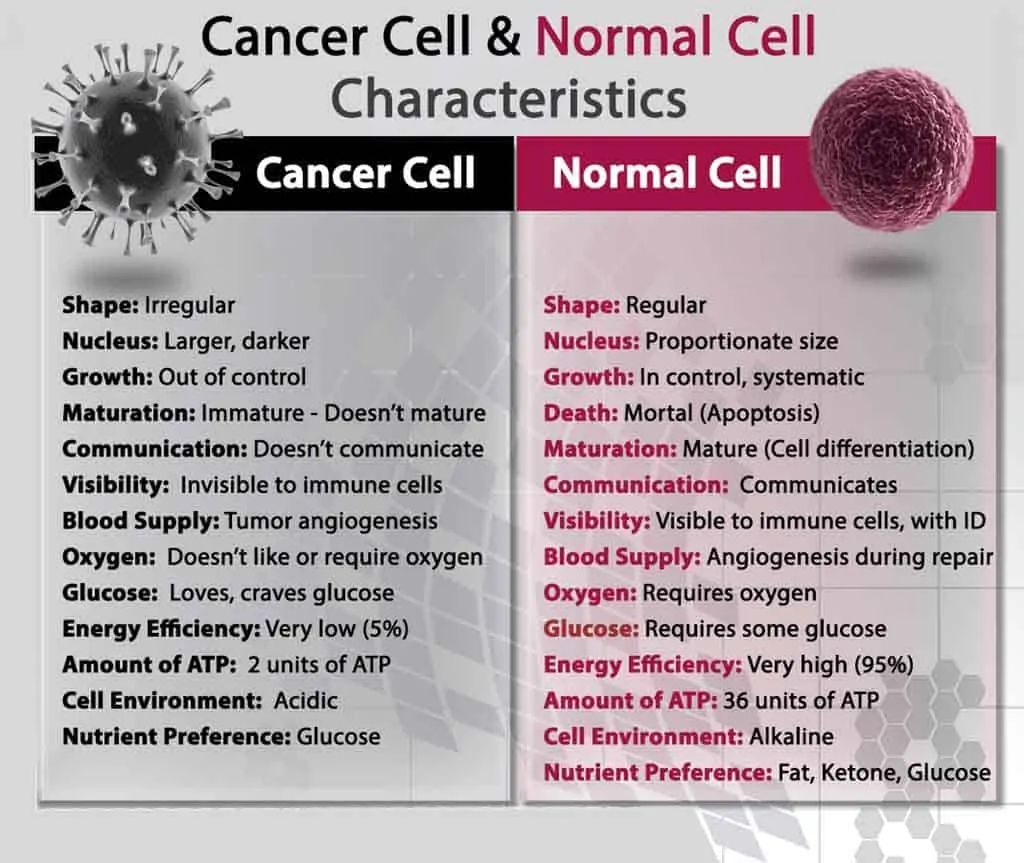
Whichever way you carve it up, if you have cancer, you need to remove sugar from your diet. When looking at fighting cancer, while at the same time keeping normal cells healthy, you have to ask the question; what makes a cancer cell different from a healthy one?
In Oncology circles, the thinking is that cancer cells are metabolically damaged cells. Mitochondria are unable to operate correctly, which explains their preference for glucose as a fuel source. Healthy cells, in contrast, exercise metabolic flexibility. As a consequence, they can burn several sources of fuel while producing more significant amounts of ATP and reasonably low levels of reactive oxidative species.
KETO DIET FOR CANCER: ENERGY PRODUCTION: AEROBIC AND ANAEROBIC
Normal, healthy cells use aerobic respiration, which occurs in the mitochondria. This process involves breaking glucose down into pyruvate in the cytosol and transporting it to the mitochondria. The mitochondria then form ATP(energy) in the presence of oxygen.
When there is a lack of oxygen, anaerobic respiration takes place. It generates ATP at almost 100 times the rate of aerobic respiration. We know that rapidly dividing tissues, such as healing wounds or cancer, generally take advantage of anaerobic respiration for quick energy production.
While anaerobic respiration produces energy faster, other factors possibly make this method of energy production beneficial for growing cancer cells.
 CANCER CELLS CHOOSE SUGAR EVEN WHEN OXYGEN IS PRESENT
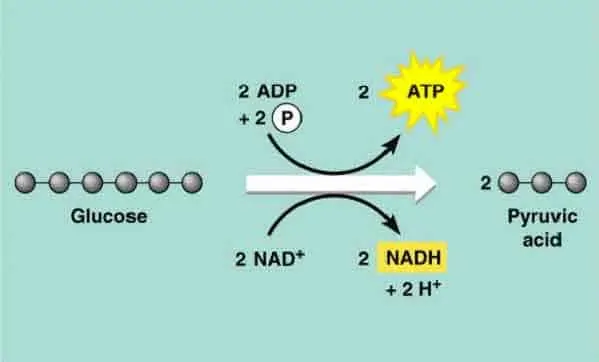
What we now know is that cancer cells, even when there is oxygen present, choose to undergo glycolysis utilizing glucose (and sometimes glutamine) as the favored fuel source. It represents a more scientific understanding of how sugar feeds cancer.
To explain, damaged mitochondrial structures within cancer cells inhibit the cells ability to perform aerobic respiration. Glucose enters the cell and converts into pyruvate within the cytosol, but it cannot enter the mitochondria to undergo aerobic respiration.
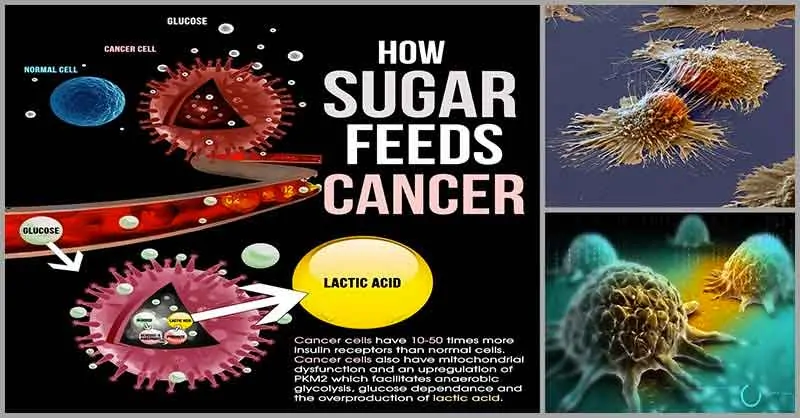
As a consequence, growing cancer cells up-regulate glucose transport proteins on their surfaces, to allow them to make as much glucose as possible to compensate. Along with this, there is a build-up of lactic acid in cancer cells as a by-product of anaerobic respiration. For the most part, this means that as long as it is abundant in the blood, sugar nourishes cancer growth in a way that rapidly promotes its development.
HOW EATING SUGAR IMPACTS CANCER CELLS
Glycolysis in cancer cells is a by-product of damaged mitochondria. Correspondingly, it also seems that cancer cells have adapted to favor glycolysis for its rapid growth, fulfilling properties. Furthermore, it promotes an environment where cancer cells can rapidly divide. Additionally, excess lactic acid that cancer cells produce during this process shuts off the body’s anticancer immune response. As a result, by deactivating anti-tumor immune cells, it shields cancer from attack by the immune system.
It is essential to realize that glycolysis favors cancer growth in multiple ways. A keto diet for cancer treatment is instrumental in stopping cancer growth by cutting off its primary fuel source, sugar. When I say sugar, I also mean carbohydrates, which turn into sugar as soon as the body breaks them down. On top of this, there are even more mechanisms by which sugar encourages cancer growth.
WHITE BLOOD CELLS AND VITAMIN C
 We all know that white blood cells are our warriors against disease. They are a powerful weapon against foreign invaders in our bodies, and this includes cancer cells. To operate at their full potential, they require large amounts of Vitamin C. Nobel Prize winner, Linus Pauling, was the first to discover the importance of vitamin C in the body in the 1960s.
KETO DIET FOR CANCER: GLUCOSE AND VITAMIN C
Glucose and Vitamin C are similar in structure and rely upon insulin to facilitate entry into the cells of the body. They do this via the Glut-1 receptor on the cell membrane. Glucose has a much higher affinity for the Glut-1 receptor, so it is absorbed much more quickly than vitamin C.
As a result, higher levels of sugar in the blood prevents Vitamin C from entering the white blood cells. Thus immunity within the body is drastically reduced, and therefore so is its ability to fight off cancer. In short, we have a double whammy effect. While sugar feeds cancer, equally, it inhibits the immune system from acting upon cancer cells.
FURTHER WAYS THAT SUGAR PREVENTS THE IMMUNE SYSTEM FROM FIGHTING CANCER EFFECTIVELY
To provide the best chance for the immune system to target cancer cells, they need to have a high phagocytic index. The phagocytic index is the process whereby white blood cells destroy foreign pathogens within the body. The white blood cells engulf the cancer cells and permanently break them down into benign by-products. Because of the relationship between glucose and vitamin C, high levels of sugar circulating in the blood lowers the phagocytic index of white blood cells. They are thus impairing their ability to fight cancer. It transpires that a blood sugar level of 120 reduces the phagocytic index by 75%, which cripples the immune system! A keto diet for cancer stops this!
OTHER WAYS THAT SUGAR COMPROMISES IMMUNITY
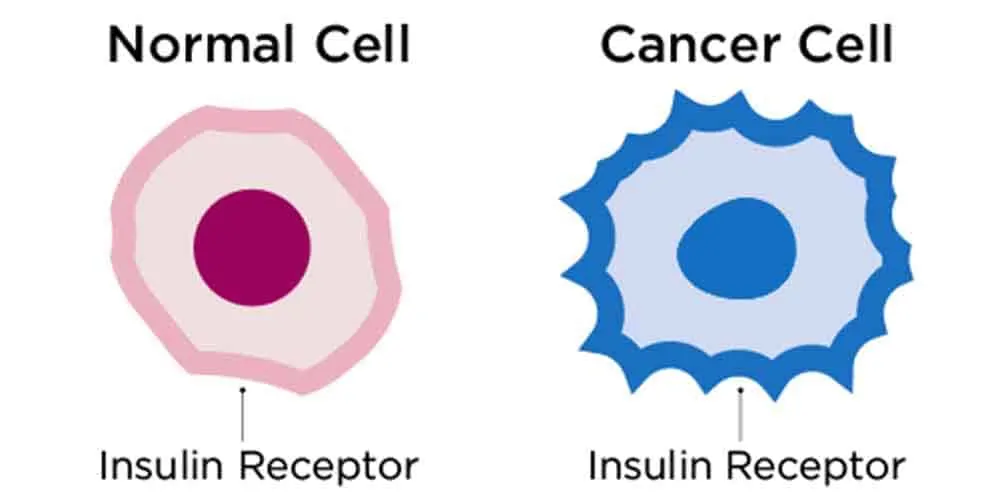
Other mechanisms in the body that are compromised by sugar include the mTOR pathway, the P53 gene, and increased insulin production. Cancer cells have an abnormally high number of insulin receptors along with a remarkably up-regulated glucose metabolism. Therefore, depending on the seriousness of your cancer development, cancer cells are robbing sugar that should be going to healthy cells. Ultimately, sugar feeds cancer at the expense of the rest of your healthy cells, while ketone bodies have the opposite effect.
SCIENTISTS THAT SUPPORT THE KETOGENIC DIET FOR THE TREATMENT OF CANCER
A keto diet for cancer treatment has many well-respected proponents. One of these is cancer researcher David Harper.
The cancer researcher and professor of kinesiology hasn’t eaten simple carbs in more than seven years. He has been on a high-fat, low-carb ketogenic diet strategy since 2013, and says he has never looked back! Harper says both he and his wife, Dale Drewery, rely on fat to power them through the day. His research has confirmed his hypothesis that a ketogenic diet prevents diseases. He and his wife have written a book “Biodiet” explaining how to go about eating a keto diet and why it is excellent for your health. Read the article here.
One of the most convincing scientists that you will come across when looking at a ketogenic diet for Cancer is Dr. Thomas Seyfried. Dr. Seyfried published a groundbreaking treatise entitled, cancer as a Metabolic Disease: On the Origin, Management, and Prevention of Cancer (Wiley, 1st ed., 2012).
This treatise provides extensive evidence that cancer is a mitochondrial metabolic disease, as opposed to a genetic disorder. It has implications for the development of new non-toxic cancer therapies, including the ketogenic diet. Many experts in the cancer research field have praised this comprehensive study as one of science’s hottest topics.
Dr. Seyfried has lectured all over the world on the subject of the ketogenic diet in cancer treatment. You can find videos of these talks on Youtube.
STOP THE SUGAR AND START A KETO DIET IMMEDIATELY
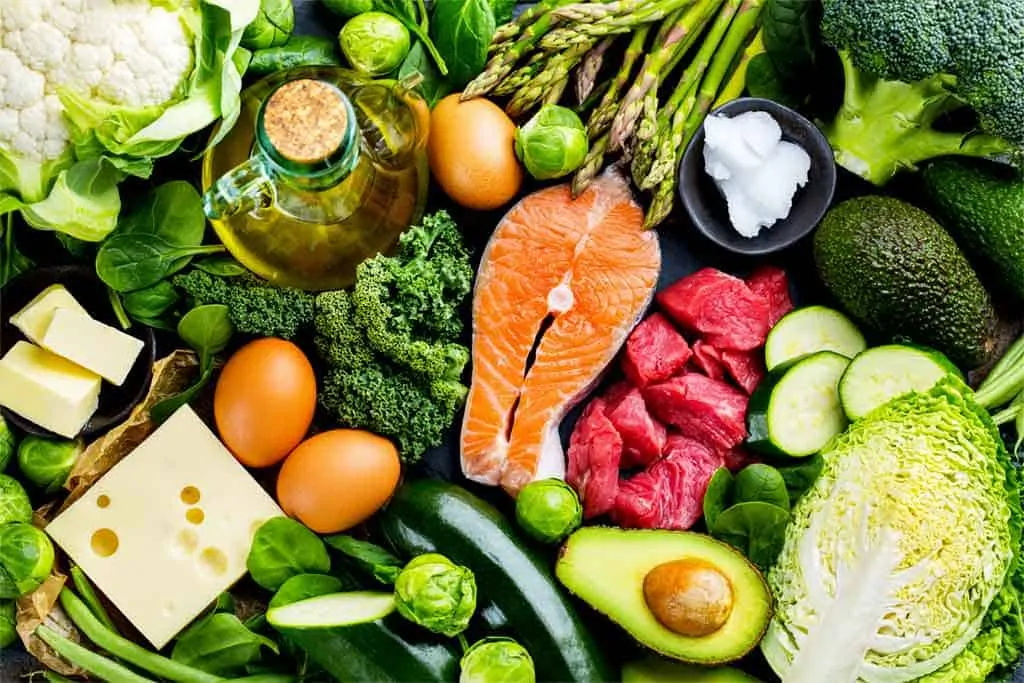
Removing sugars and carbs is a step in the right direction. However, it is imperative to implement a ketogenic diet. Train your healthy cells to burn ketones, made from fat, as energy instead of glucose. See the ketogenic diet.
Removing sugars and carbs is a step in the right direction. However, it is imperative to implement a ketogenic diet. Train your healthy cells to burn ketones, made from fat, as energy instead of glucose. See the ketogenic diet.
As previously discussed, aggressive cancer cells will readily steal glucose away from healthy cells. The cancer cells feed while leaving healthy cells in a weakened state. As we have seen, most cancer cells cannot utilize ketones as a fuel source. So, by teaching your healthy cells to use ketones for energy, you help return vitality to your healthy cells while weakening your cancer cells. It is a winning situation from both angles. A keto diet for cancer is a smart choice!
- WHAT IS A KETO DIET?
- KETO DIET FOR BEGINNERS – ALL YOU NEED TO KNOW.
- KETO DIET FOODS – COMPLETE LIST.
- BEST FOODS TO EAT ON A KETO DIET.
- KETO DIET SUCCESS- BEST 10 TIPS FOR WINNING!