

Understanding how HSCT for MS works helps you to decide whether this treatment is for you!
This treatment resets your immune system, which halts the disease progression of MS. HSCT has is a ‘re-boot’ for the immune system. This simplistic explanation is the easiest way to understand how the procedure works.
In the same way that you re-boot your computer when it is playing up, HSCT re-boots your immune system. The immune system restarts. It stops malfunctioning, and it returns to working correctly, the way that it did before MS.
The new immune system has no cell memory of malfunction and therefore, no longer attacks the nerves(Myelin.) The body has a chance to repair the damage previously inflicted! No more MS!
UNDERSTANDING HOW HSCT FOR MS WORKS TO HEAL MULTIPLE SCLEROSIS

HSCT affects a cure for MS by either entirely or partially wiping out the memory of the bodies immune system. There are two ways to do this. Myeloablative HSCT is the harsher treatment and thoroughly deletes the memory. Non-Myleoblative HSCT uses a different method that only partially removes the bodies memory of the immune system.
Both forms affect a change of the body’s overall T and B-lymphocyte(antigen-binding) collection. Autoimmunity becomes inactive and causes the body’s immune cells to become “antigen naive.” Consequently, the body becomes Immune self-tolerant once again.
Ultimately this stops the underlying MS disease activity & progression. “Resetting of the immune system” has then taken place. After HSCT treatment, the body can repair itself. Sometimes this means that it can reconfigure adaption to existing neural damage.
Alternatively, the body has an opportunity to repair itself without the continuing onslaught of disease activity. The result is an improvement of existing conditions and ongoing recovery of many lost functions.
CHEMOTHERAPY IS AN ESSENTIAL PART OF HSCT
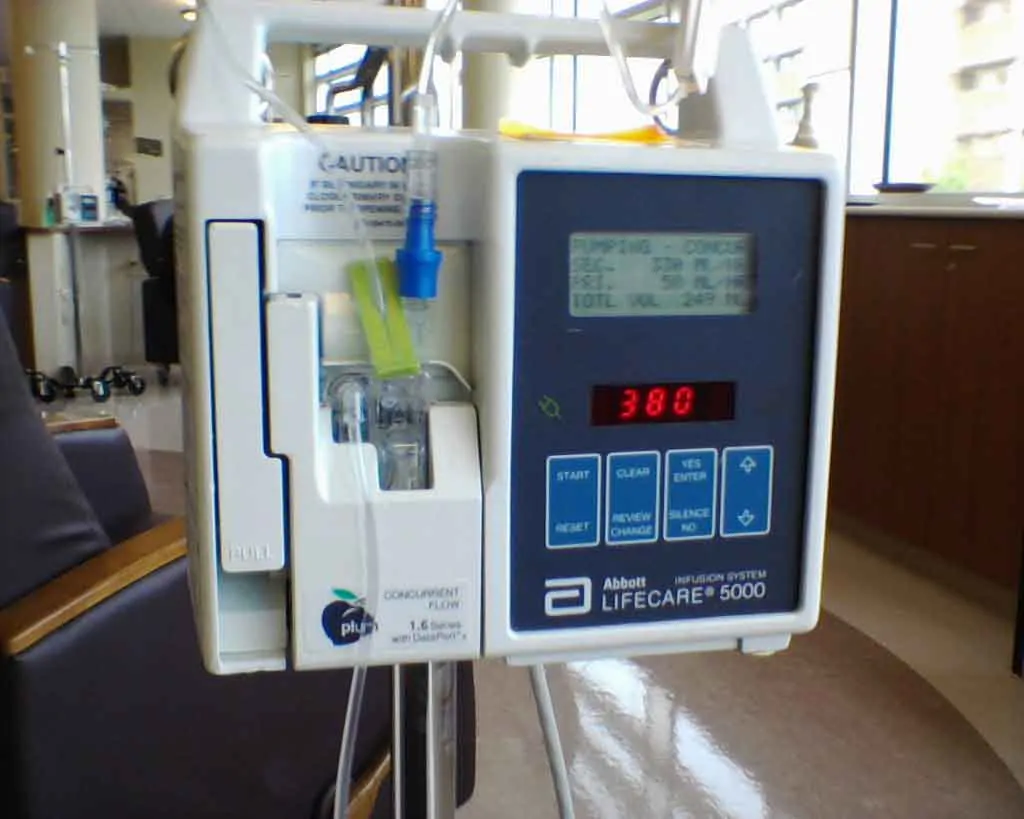
During HSC, chemotherapy destroys the ‘T’ and ‘B’ lymphocytes in the blood. These are the cells that carry the faulty memory and attack the Myelin. Once eliminated, un-programmed Virgin cells made in the Bone Marrow are infused into the body to replace them.
Successful HSCT is entirely dependent on the chemotherapy aspect of the treatment. It explains why merely injecting stem cells into the body does not render the body’s immune system self-tolerant. It is imperative that the chemotherapy destroy the bad cells first.
New virgin cells are ‘harvested’ from the bone marrow after chemotherapy. Finally, these cells regulate the immune system the body to get the new immune system firing on all pistons!
STIMULATING PRODUCTION OF STEM CELLS

For approximately four days, patients receive injections twice a day to stimulate the production of new stem cells. This process is known as mobilization.
Mobilization is a very straightforward process, although it may cause mild bone pain. Over-the-counter pain killers should be sufficient to alleviate any discomfort caused.
UNDERSTANDING HOW HSCT FOR MS WORKS -COLLECTION OF STEM CELLS

“Apheresis” is the collection of new stem cells. Some people experience a little pain in the hip, but in most cases, the procedure is pain-free.
ISOLATION AFTER CHEMOTHERAPY IS CRUCIAL

The administration of chemotherapy takes four days and wipes out the existing immune system. Blood analysis evaluates whether the system is ready for the stem cell transplantation.
UNDERSTANDING HOW HSCT FOR MS WORKS; PERFORMING THE STEM CELL TRANSPLANT

Once the chemotherapy ends, preparation of the thawed and newly harvested stem cells begins. The next part of the procedure is to reintroduce them to the body, which is a similar process to a blood transfusion.
People have commented on symptoms that include nausea, diarrhea, cough fever, chilling, and often a headache.
THE ENGRAFTMENT PART OF THE PROCEDURE

During HSCT treatment, ‘engraftment’ is the next stage of the process. Engraftment is the name for the newly harvested stem cells within the body.
It commonly takes between one and three weeks to complete. It is confirmation that the new immune system is now producing blood cells as expected. During this phase, patients have reported experiencing aching in the bones, lower back, thighs, and pelvis.
Once completed, however, the newly functioning immune system will be devoid of any memory of MS!
The immune system will now be operating normally. The blood count will rise, and the white cells in the blood will resume work. They will again be fighting off bacteria and preventing infections.
Shortly after this happens, the hospital releases the patient. It is important to remember that the immune system will remain compromised for some time. All facilities advise being cautious about exposure to germs or illness for at least a year after HSCT.
THE RECOVERY PHASE: WHAT IS HSCT?

The complete recovery phase takes twelve to eighteen months. If you have MS, you will be aware that MS symptoms are like fingerprints. Each person will have their specific version of the disease.
Understanding how HSCT for MS works, makes you realize that recovery with HSCT is unique to each patient. Some people have reported seeing continued improvement long after the procedure. They claim that developments have taken place as long as five years post-transplantation. Depending on the type of MS diagnosed before receiving treatment, results can vary considerably.
https://www.hsctstopsms.com/simple-overview-of-coimbra-vitamin-d-protocol/Please see “what to expect” http://www.hsctstopsms.com/what-is-hsct/. HSCT has been successful in halting disease progression in all types of MS. A small percentage of people experience ‘failure’ (approximately 15-20 percent).
The HSCT facility in Russia, Maximov Institute, has successfully treated several Secondary Progressive and PPMS patients. The most exciting part of getting HSCT is finding out that the procedure has been successful.
Success means that the previous underlying disease activity has ended. The icing on the cake is experiencing improvement and often a reversal of pre-existing symptoms. There have been some genuinely miraculous recoveries.
NEXT: CHOOSING AN HSCT FACILITY
If you are serious about HSCT, then take a look at which facility is the most suitable choice for your treatment.
I would like to know if there are any grants or funding available for the HSCT? If not how is the average disabled person like myself able to afford to have this done?
I am in so much pain most all the time I would do anything to make it stop
Hi Lloyd. Unfortunately HSCT is not supported as a valid treatment by most (not all) neurologists. In the UK they have been treating people on trial (Sheffield – I can provide the phone number if you are interested) and a few cases compassionately off trial, but only in cases of severe RRMS when all drugs tried have failed to halt the rapid progression of the disease. What type of MS do you have, when were you diagnosed and what is your age?
Thanks for info v useful. I’ve had ms since 14 and am 53 now using fampyra n still mobile. Given the ms longevity for me do u think this tratement would be beneficial to me? Or have I had the condition to long? Thank you.
Hi Lynn,
It depends on many factors. HSCT has been shown to stop disease progression in all types of MS, which is why I set up this site as some neurologists refute this claim! When the disease progresses from RRMS to SPMS or if it is PPMS from the start does affect who will treat you and where. Most neurologists want a very standard RRMS with failed first line DMD’s and active lesions/inflammation. This conforms to the EBMT guidelines, but Dr. Federenko in Moscow has had phenomenal success treating progressive patients…both PPMS and SPMS. It would be a good idea for you to join the HSCT forum on facebook. It is a closed group so you have to request to join but there are masses of people on there that have been treated and can share information. No you are not too old – especially if you are still mobile. The group is: Hematopioetic Stem Cell Transplant – MS & Autoimmune Diseases. Here you can ask questions specific to your case. What sort of MS do you have now and what drugs have you taken? If you would like me to send you the latest Russian paper and the results please e mail me at: hsctstopsms@gmail.com
Thank you so much for this information.
Hope it helped Faith! 🙂
Hi I’m in Australia and very interested in joining the facebook group I was diagnosed in July with RRMS would love to learn more can you please send me the link or name of the group to join up. Thanks
Hi Lenette. If you put HSCT into the search bar in Facebook many different groups will come up. If you are in Australia you should most definitely look for ‘Moving Mountains to stop MS’ which is run by my friend Kristy Cruise who was very successfully treated with HSCT and is incredibly knowledgeable particularly about the options available in Aus.
https://www.facebook.com/MovingMountainsForKristy/
Good luck and good health. 🙂
Hi, I am 33yrs old DX in 08 with ms I was accepted off trial for hsct with Dr Burt in Chicago
When I click on the “about MS” tab, nothing happens, and no drop down box to reveal “what to expect”. I’m 54 years old, have had MS since 1988, and have been on 2 of the interferons, since 2001. I think I’m SPMS now, as I’ve had a steady decline since 2007, foot drop, spasticity, and what I call left hip drop. In the last year, I’ve developed more left arm weakness and inability to hold it up. I use a rollator to get around my home, but use a wheelchair or scooter when out and about. This is a treatment I’m interested in, but curious as to reversal of symptoms in SPMSers and PPMSers. Might be too late for me. And I’m very financially challenged as well.
Still I’m curious about this procedure!
Hi Jayne, I think you mean “about HSCT” which is not a live tab. The actual information links are in the menu below that when you click on it. This site offers concise information but if you want to ask specific questions please join the forum : “Hematopioetic Stem Cell Transplant – MS & Autoimmune Diseases” on facebook. It is a closed group so your questions etc will not appear on your facebook. You can ask questions there to see how HSCT can help you and how you can access treatment! Good luck with your journey! 🙂
Hi I was diagnosed with ppms 2 years ago…from stumbling to weak leg…to crutches…now need mobility aids…
Can you give me any information please on the stem cell treatment trials here in uk..and info on how long it will be before legislation to label this and any campaigns out there to lobby government once sct is passed trial stage and awaiting nice authority to get it out on nhs. Many many thanks. Time is of the essence for suffers of MS who are progressing sometimes daily in a decline.
Hi Debbie,
Sadly here in the UK they will only consider RRMS or very early SPMS for HSCT. This is very limited and hard to get on the program, as you need specific criteria – failed DMDs and enhancing lesions and inflammation that is shown on an MRI with contrast. PPMS is not considered to benefit from HSCT as there is generally no inflammation which is the reason that UK Neuros will not consider you for HSCt. This is primarily due to the EBMT who established guidelines based on Dr. Burt in Chicago (considered the main pioneer of HSCT)who steadfastly claims the HSCT does not work on progressive forms of MS, although this has been proven again and again to be untrue. Dr. Federenko in Russia has has phenomenal success with PPMS patients. You can google them. If you would like more info on how HSCT has helped others with PPMS please join HSCT Awareness on face book.
I have MS this would dream come true to have this done!!!!
Julie
Hello,
I had a small question, when will this Hsct treatment be approved by the FDA?
Will it EVER be approved? I can’t find any information online…
Louise
The expected FDA approval time line is 2023.
Why does it take so long to get this treatment approved? Lemtrada or Campath only took 4 years!
One small tip, the risks of HSCT are also very important to know, if you could add this on your website …
Grts
L
Yes there are lots of new things coming up too John. Anti Lingo is one of the most promising. Google it. Thanks for your comment!
Can you tell me the mechanism by which patients get temporary spastic spasms post treatment please? I am wondering how I can treat these manually?
Hi Sue,
I am not a doctor, so I cannot answer this question. It might be worth you joining some of the HSCT Facebook groups, where you can meet many people that have had treatment and also many treating doctors. Good luck!